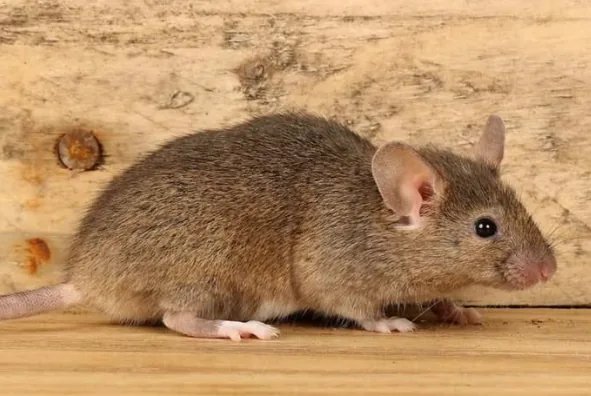
Short answer
Mice move into Gillette homes in fall because the first hard freezes push them out of fields, hay and draws. They get in through gaps as small as a dime, most often at the garage door, utility lines, foundation vents and dryer vents. Seal those gaps with steel mesh and sealant, set snap traps along walls, and call a pro if you keep catching mice after two weeks.
Why do mice come inside in the fall?
Mice come inside in the fall because their food and cover outside disappear as the prairie freezes. In Gillette, the first nights below freezing usually arrive in late September or October. House mice and deer mice then follow warm air leaking from your home to find a way in.
Once inside, they look for three things: warmth, nesting material and food. Garages, basements, wall voids near the furnace and the space behind the stove give them all three. A pair of mice can start a family within weeks, and by midwinter one mouse can become a dozen.
What are the 7 most common entry points?
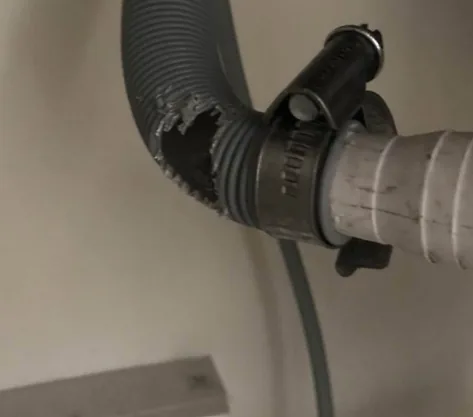
The seven most common mouse entry points in Gillette homes are the garage door, utility line gaps, foundation and crawl space vents, dryer and bath vents, gaps where siding meets the foundation, window wells and sliding door tracks. Each one can be sealed in an afternoon with the right materials.
- Garage door bottom seal. Rubber seals crack in the cold and wind. Corners at the side tracks are the weakest point.
- Utility lines. Gas, water, cable and AC lines often enter through holes much bigger than the pipe.
- Foundation and crawl space vents. Screens rust or get knocked loose by snow shovels and mowers.
- Dryer and bath vents. Missing flaps let mice and birds walk right into the duct.
- Siding-to-foundation gap. The joint where siding stops and concrete starts can leave a long, open crack.
- Window wells. Leaves and snow pile up, and mice slip in around basement window frames.
- Sliding door and patio door tracks. Worn weatherstripping leaves gaps at the bottom corners.
How do you seal mouse entry points the right way?
Seal mouse entry points with materials mice cannot chew: steel mesh or copper mesh stuffed into the gap, then sealant or mortar over it. Hardware cloth works for vents and larger openings. Foam alone does not work because mice chew straight through it.
- Stuff steel or copper mesh into gaps around pipes and wires, then cover with sealant
- Replace garage door bottom seals and add corner pads at the tracks
- Cover foundation vents with quarter-inch hardware cloth
- Install dryer vent covers with a working flap
- Caulk the siding-to-foundation joint where it is open
- Add window well covers and keep wells clear of leaves
A whole-house check takes a pro about an hour. If you do it yourself, start with the garage and the side of the house closest to open land.
Where should you set mouse traps?
Set mouse traps along walls where mice travel, with the trigger end touching the wall. Good spots are behind appliances, under sinks, along basement walls, in the garage and near any droppings. Use several traps close together rather than one trap in the middle of a room.
Peanut butter, a small piece of oat or a bit of cotton for nesting all work as bait. Check traps daily, wear gloves and spray any catches and droppings with a bleach solution before removing them. Avoid loose poison bait inside the house, since mice can die in walls and pets can find it.
Are deer mice dangerous?
Deer mice can be dangerous because they may carry hantavirus, a rare but serious illness spread by breathing dust from their droppings, urine or nests. Wyoming has reported cases over the years, so cleanup needs care.
To clean up safely, open doors and windows for 30 minutes, wear gloves, spray droppings and nests with a bleach and water solution, wait five minutes, then wipe up with paper towels and bag everything. Never sweep or vacuum dry droppings. For a heavy mess in a cabin, shed or crawl space, have a pro handle it.
When should you call a pro?
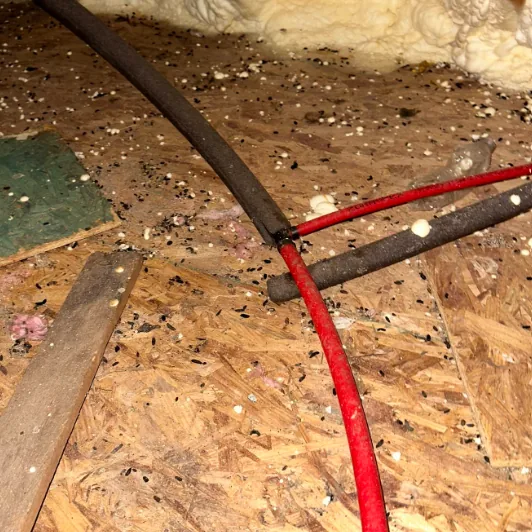
Call a pro when you keep catching mice after two weeks, when you hear activity in walls or ceilings, when you find droppings in more than one room, or when mice are chewing wires. Those are signs that mice have more than one way in and are breeding inside.
A professional rodent control Gillette WY service traps, seals every gap and sets monitoring stations so you know when the problem is gone. Homes on the edge of town, like those in pest control Antelope Valley-Crestview, often need a fall check every year. If you are also seeing spiders and fall bugs, our household pest control Gillette WY plan pairs well with rodent work.
Need help with this in Gillette? Call for rodent control (mice & rats).
Ask a Pest Expert – (000) 000-0000FAQs
Can one mouse turn into an infestation?
Yes. A female mouse can have a litter every few weeks, so one or two mice can become many over a winter.
Do ultrasonic repellers keep mice away?
They are not reliable. Sealing gaps and trapping work much better.
What smell keeps mice away?
Scents like peppermint may help a little for a short time, but they do not replace sealing entry points.